
 Aminah Zaheer

Measuring a box correctly is essential for packaging, shipping, storage, and product presentation. Whether you are designing custom packaging or preparing items for delivery, accurate measurements ensure the right fit, reduce damage risks, and help control costs.
This guide explains how to measure a box step by step using standard industry practices, along with key concepts like internal dimensions, external dimensions, and volume calculation.
What Are Box Dimensions?
Box dimensions refer to the three main measurements of a box:
Length × Width × Height (L × W × H)
- Length is the longest side of the box
- Width is the shorter side next to the length
- Height is the vertical distance from the base to the top
These dimensions are always written in this order to maintain consistency across the packaging and shipping industry. Understanding this format is important because even a small mistake in order can lead to incorrect packaging or higher shipping costs.
How to Measure a Box?
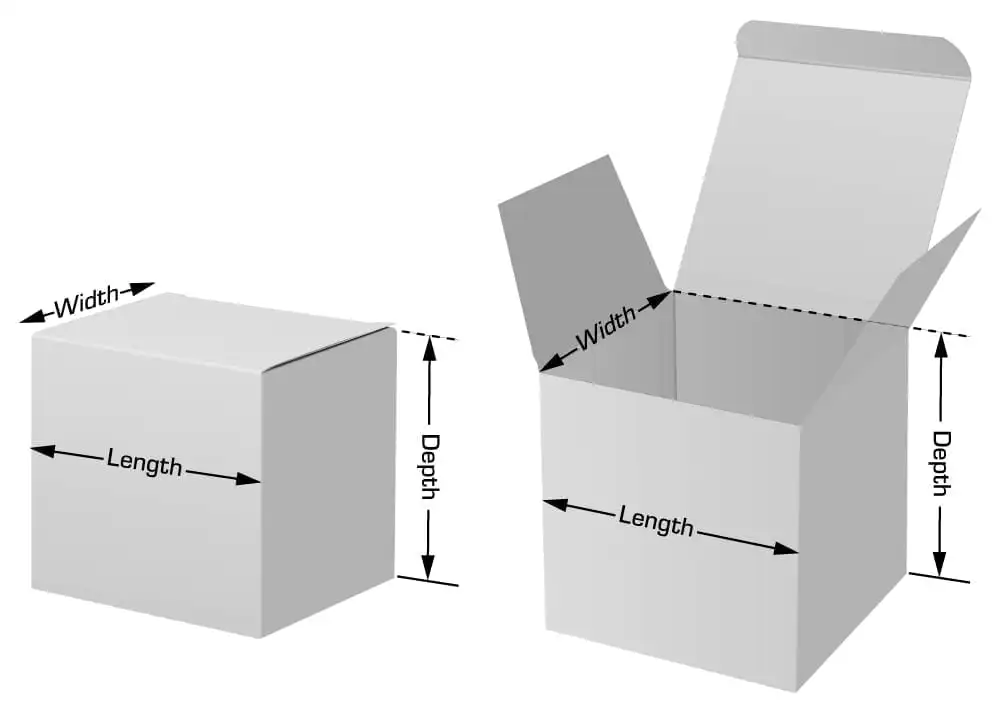
Measuring a box accurately requires a consistent method and attention to detail. Following the correct process ensures your packaging fits the product properly and avoids errors in manufacturing or shipping.
Step 1: Measure the Length
Start by placing the box on a flat and stable surface. Identify the longest side of the box base. Use a ruler or measuring tape to measure from one end to the other along this side. This measurement is considered the length and it is always taken first.
Step 2: Measure the Width
Next, measure the side that runs across from the length. This is the shorter side of the box base. Place your measuring tool from one edge to the opposite edge. This measurement is the width and it should always be taken after the length.
Step 3: Measure the Height
Now measure the vertical side of the box. Start from the bottom base and measure up to the top edge of the box. This is known as the height or depth. Make sure you do not include any flaps or lids in this measurement, as only the main body of the box should be considered.
Step 4: Record in the Correct Format
Once all three measurements are taken, write them in the standard industry format:
Length × Width × Height
For example:
12 × 8 × 6 inches
Maintaining this order is essential because switching the sequence can lead to incorrect box production, poor product fit, and potential shipping issues. Consistency in recording dimensions helps manufacturers and suppliers clearly understand your packaging requirements.
Box Measurements Explained
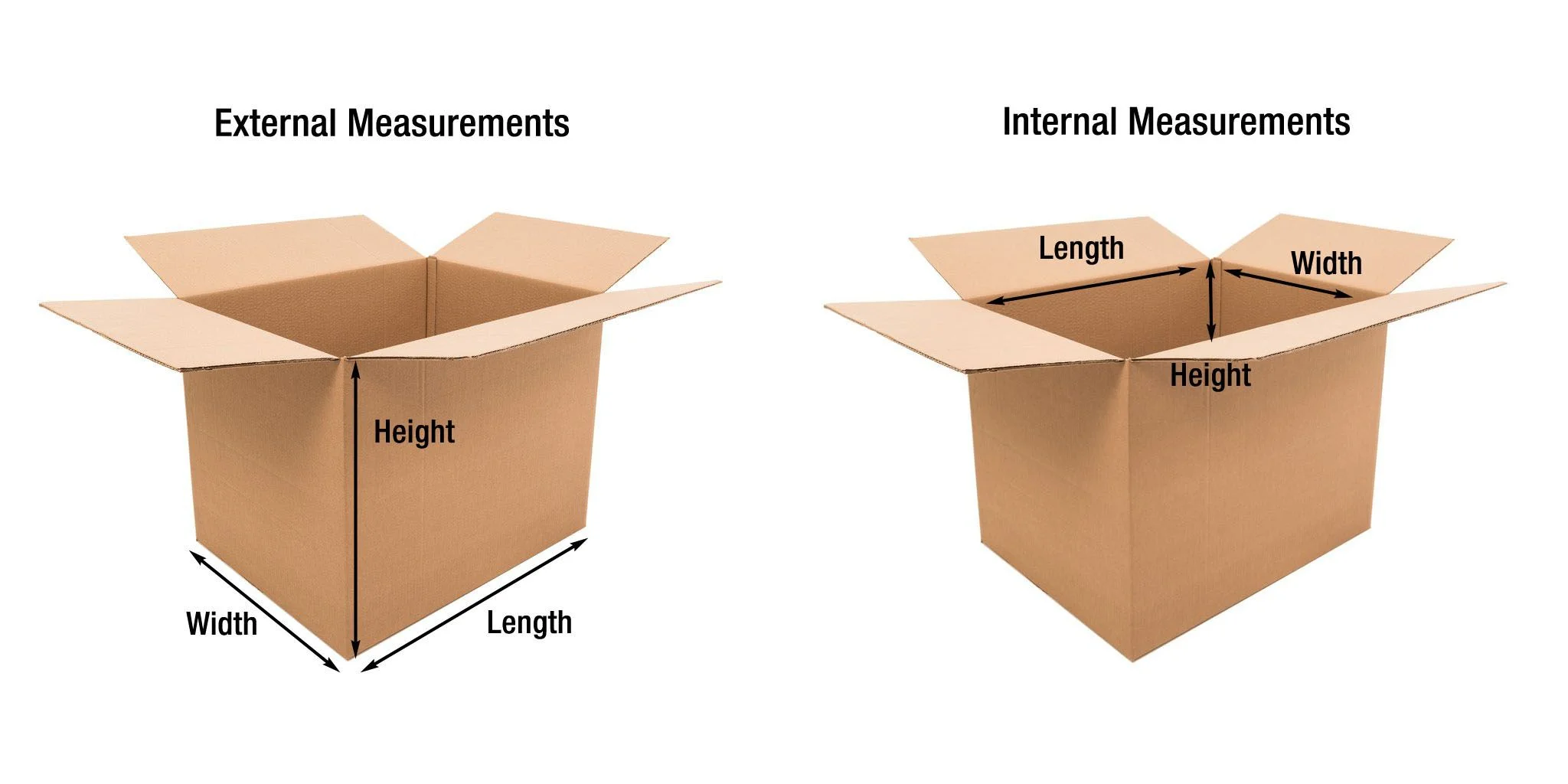
Understanding the different types of box measurements is essential when designing or ordering packaging. It helps you choose the right size, avoid fitting issues, and ensure smooth handling during shipping and storage. The two main types of measurements are internal and external dimensions, and each serves a different purpose.
1. Internal Measurements
Internal measurements refer to the space available inside the box where the product will be placed. These dimensions are taken from the inner walls of the box and represent the actual usable area.
When measuring internal dimensions, you measure:
- Length from one inner side to the opposite inner side along the longest side
- Width across the shorter inner side
- Height from the inside base to the top inner edge of the box
These measurements are the most important when your goal is to ensure that your product fits perfectly. Packaging manufacturers typically use internal dimensions when producing custom boxes because they provide accurate sizing for the product, reduce movement inside the box, and help prevent damage.
2. External Measurements
External measurements refer to the total size of the box from the outside. These dimensions include the thickness of the material used to make the box.
When measuring external dimensions, you measure:
- Length along the longest outer side of the box
- Width across the outer shorter side
- Height from the bottom outside surface to the top edge
External measurements are important for logistics purposes such as shipping, warehousing, and storage planning. They help determine how much space a box will occupy, how boxes can be stacked, and how shipping costs are calculated.
Which Measurement Should You Use
- Use internal measurements when designing or ordering custom packaging to ensure a proper product fit
- Use external measurements when calculating shipping space, storage requirements, or transportation costs
Choosing the correct type of measurement ensures accuracy, efficiency, and better overall packaging performance.
How to Calculate Box Volume?
Box volume is an important measurement that helps determine how much space a box occupies. It is widely used in shipping, storage planning, and packaging design to estimate capacity and calculate costs.
To find the volume of a box, you need three measurements: length, width, and height. These must be taken in the standard order and in the same unit. The formula used to calculate box volume is:
- Volume = Length × Width × Height
This means you multiply all three dimensions to get the total space inside the box. For example, if a box has the following dimensions:
- Length = 10 inches
- Width = 5 inches
- Height = 4 inches
Then the volume will be:
- Volume = 10 × 5 × 4 = 200 cubic inches
The result is expressed in cubic units, such as cubic inches, cubic centimeters, or cubic meters, depending on the unit you use for measurement. It is important to always use the same unit for length, width, and height. Mixing units can lead to incorrect calculations and inaccurate results.
Common Mistakes When Measuring a Box
Even small measurement errors can lead to poor packaging fit, product damage, or increased shipping costs. To ensure accuracy, avoid the following common mistakes:
- Measuring in the wrong order instead of following length, width, height
- Confusing internal dimensions with external dimensions
- Including box flaps or lids when measuring the height
- Using inconsistent units such as mixing inches and centimeters
- Measuring a box that is uneven, bent, or damaged
- Not placing the box on a flat surface before measuring
Avoiding these mistakes helps maintain accuracy, improves packaging efficiency, and ensures better results in production and shipping.
Get Perfect Sized Boxes from HT Custom Boxes
Accurate measurements are the foundation of effective packaging. At HT Custom Boxes, we help businesses create perfectly sized packaging solutions that protect products and enhance presentation.
Whether you need rigid boxes, luxury packaging for candles or other luxury items, or fully customized designs, our team ensures precision in every dimension to match your exact requirements. Contact HT Custom Boxes today to get packaging that fits your product perfectly and elevates your brand.
 Phone
Phone