
 Aminah Zaheer

Understanding length width and height is essential when working with packaging. These three measurements define the size of a box and help ensure your product fits properly. Whether you are designing custom packaging or selecting the right box for shipping, knowing how these dimensions work allows you to make accurate decisions.
What Are Box Dimensions?
Box dimensions refer to the three key measurements used to describe the size of a box. These are length width and height, commonly written as L × W × H. This format is used across the packaging and shipping industry to maintain consistency and clarity. Each of these dimensions represents a different side of the box. Together they define the total size and shape of the packaging. Using the correct dimensions ensures that the box fits the product properly and performs well during storage and transportation.
1. Length
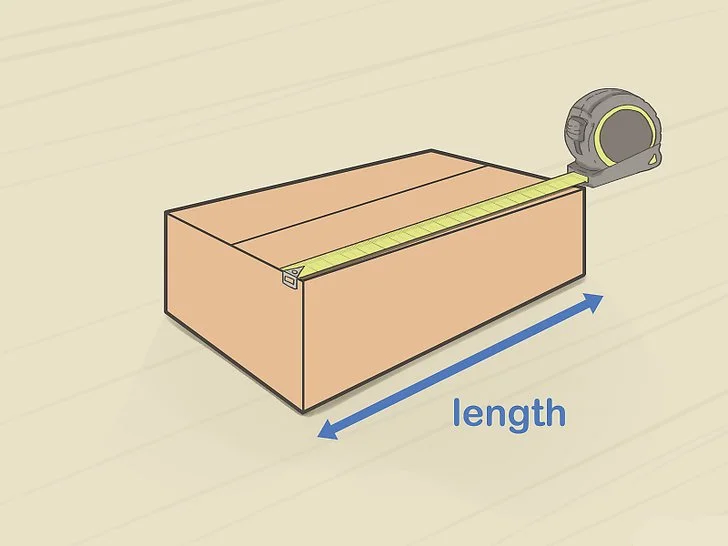
Length is the longest side of the box when it is placed on a flat surface. It runs horizontally from one end to the other and is always measured first. In most cases, the side that appears longest when you look at the base of the box is considered the length. Identifying the correct length is important because it sets the reference for the other two dimensions.
2. Width
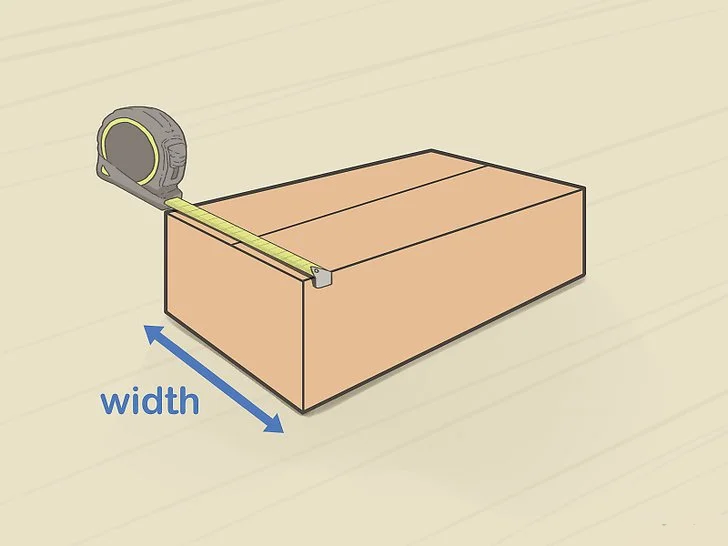
Width is the shorter side of the box base that runs across from the length. It is measured horizontally and is always taken after the length. The width is perpendicular to the length and helps define the shape of the box. Together, length and width form the base area of the packaging.
3. Height
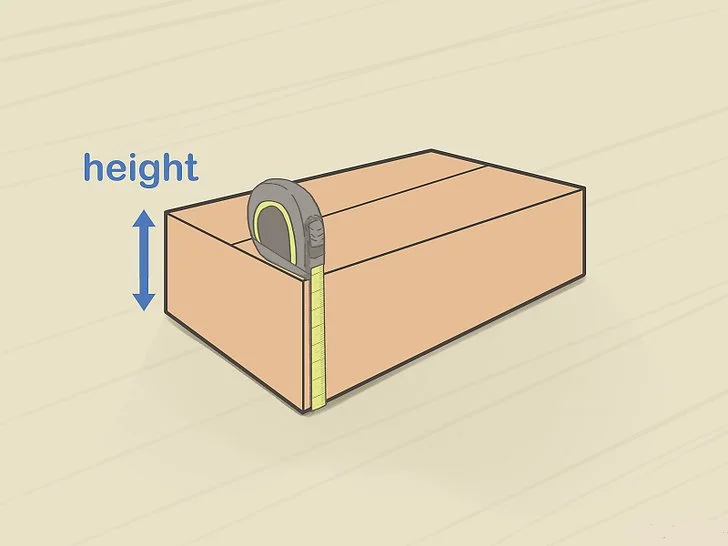
Height is the vertical measurement of the box. It is measured from the base to the top edge. This dimension shows how tall or deep the box is. In packaging, height is sometimes referred to as depth, especially when describing product placement inside the box.
Understanding 2D and 3D Dimensions
- Two-Dimensional (2D) Boxes
- Three-Dimensional (3D) Boxes
1. Two-Dimensional (2D) Boxes
A two-dimensional (2D) box is a flat shape that only has length and width. It does not include height or depth, which means it has no volume and cannot hold physical items inside. This type of packaging is mainly used for flat products that do not require extra space or protection from depth. Common uses include packaging for photographs, certificates, documents, and canvas prints. These boxes are simple, lightweight, and mainly designed to protect and present flat items in an organized way.
2. Three-Dimensional (3D) Boxes
A three-dimensional (3D) box is a solid structure that includes length, width, and height, also known as depth. Because it has all three dimensions, it has volume and can store products inside. This makes 3D boxes the most commonly used type in packaging. They are ideal for shipping, storing, and displaying products safely. These boxes are used for a wide range of items such as soap boxes, gable boxes, and pillow boxes, and they play an important role in everyday packaging and transportation.
The Correct Order of Length, Width, and Height?
The standard way to measure a box is Length × Width × Height (L × W × H). This order is widely used in packaging and shipping because it provides a clear and consistent way to define dimensions. However, the order of these measurements can sometimes change depending on how the box is positioned or how a brand prefers to measure it.
Height, Width, Length Order
In some cases, especially for vertical boxes, the height is measured first, followed by width and then length. This approach is often used when the box is tall and upright, as height becomes the most noticeable dimension. Different brands may follow this method based on their packaging requirements and product presentation.
Height, Length, Width Order
For horizontally placed boxes, another method is to measure height first, then length, and finally width. This order may vary, but the overall calculation for volume remains the same regardless of how the dimensions are arranged. The purpose is simply to describe the box clearly based on its orientation.
Length, Height, Width Order
When viewing a box from the side, the measurement order may change to length, height, and then width. This usually happens when the box is rotated to better understand its structure from a different angle. In this view, the length may appear smaller compared to the height and width, but all three dimensions still represent the same physical space.
How to Identify Length Width Height in a Box?
Length vs Width
Length and width are always at right angles to each other and together form the front view of a box. These two dimensions determine how long and wide a product can be when placed inside the packaging. They are important for defining the surface area and layout of the box.
Width vs Height
Width and height are also positioned at right angles, but from the front view, the height is not always visible. These dimensions work together to define how deep and tall the box is, which directly affects how much internal space is available for the product.
Height vs Length
Height and length also play a key role in defining the overall structure of the box. From certain angles, the height may be less visible, but it still determines how much vertical space is available. Together, height and length help define how a product fits inside the box from top to bottom and front to back, ensuring proper storage and protection.
How to Measure and Find Box Dimensions
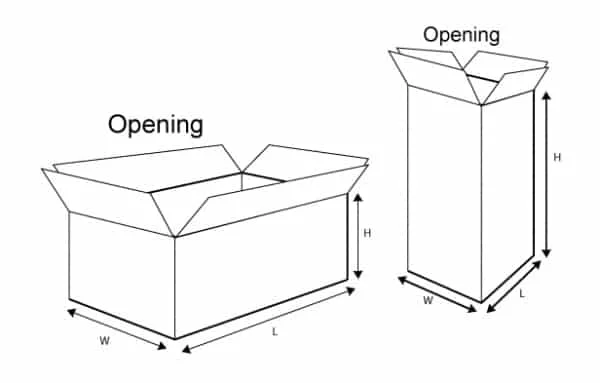
To measure and find the dimensions of a box accurately, follow these simple steps:
- Place the box on a flat and stable surface so all sides are clearly visible
- Identify the longest side of the box base and measure it. This is the length
- Find the shorter side across from the length and measure it. This is the width
- Measure the vertical side from the bottom to the top edge of the box. This is the height
- Make sure you are only measuring the main body of the box and not including any flaps
- Record all three measurements in the correct order: Length × Width × Height
How to Calculate Box Volume Using L × W × H
Box volume is calculated using the three dimensions of the box. It helps determine how much space the box occupies and is commonly used in shipping and storage.
The formula for calculating volume is:
- Volume = Length × Width × Height
For example, if a box has a length of 10 inches, a width of 5 inches, and a height of 4 inches, the volume will be:
- 10 × 5 × 4 = 200 cubic inches
The result is expressed in cubic units, which represent the total space inside the box. It is important to use the same unit for all three measurements to ensure accurate results.
Get Accurate Box Dimensions with HT Custom Boxes
Accurate dimensions are the foundation of effective packaging. At HT Custom Boxes, we help businesses create perfectly sized packaging that fits products with precision and enhances presentation. Whether you need custom sizes or premium packaging solutions, our team ensures every box is designed with the correct dimensions to meet your exact requirements.
 Phone
Phone